

Navigating dementia with compassion and understanding
Dementia may change a person’s memory, communication, and abilities, but it does not erase who they are. Our goal is to help you see the person—not only the diagnosis—and feel more confident supporting someone you love. Dignity, patience, compassion, and meaningful connection still matter through every stage.

Understanding dementia: what it is and what to expect
Are you seeing changes in someone you love and feeling confused, worried, or unsure how to respond? Many families and caregivers face similar feelings. Here, we offer clear, compassionate information about what dementia is, the common changes it can bring, and how it might affect communication and daily life. Our aim is to provide practical guidance without overwhelming medical language, helping you understand this journey with greater clarity.

Care shaped by real bedside experience
My approach comes from years of hands-on experience as a Licensed Nursing Assistant and Certified Death Doula. Families often need more than medical facts—they need someone who can explain what changes may mean, what to expect, and how to respond with compassion.
I combine practical dementia education with dignity-focused care, honest reassurance, and respect for both the person living with dementia and the caregiver supporting them.
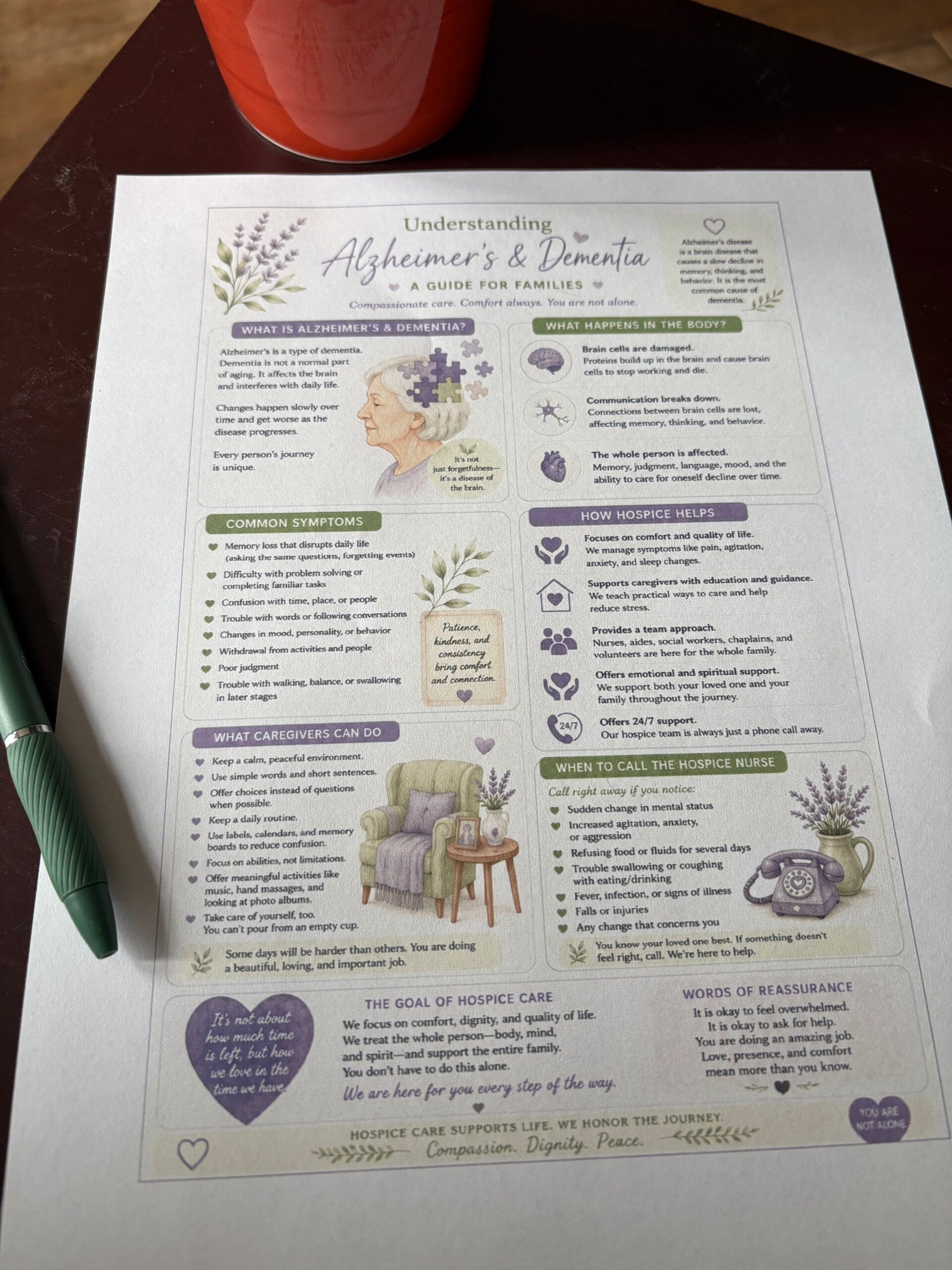
Essential topics in dementia care
- Understanding dementia
- Changes families may notice
- Communicating with compassion
- Supporting dignity and independence
- Responding to distress or changes in behavior
- Knowing when to contact a healthcare professional
Understanding Dementia With Compassion
Dementia can affect memory, communication, judgment, mood, and the ability to complete familiar daily tasks. Every person’s experience is different, but respectful communication and consistent support can help care feel safer for everyone involved.
Speak calmly, offer simple choices, avoid unnecessary correction, and respond to the emotion behind the words.
Most importantly, remember that a diagnosis does not erase the person. Behind every stage is someone who still deserves dignity, patience, connection, and love.
Looking for a simple guide you can print, share with family, or keep nearby throughout the caregiving journey?
The person is still here.
Dementia may change memory, communication, and abilities, but it does not erase identity, emotions, relationships, or worth.
A diagnosis changes many things. It does not change a person’s worth.